
We partner with product and engineering teams to uncover real user needs, simplify complex workflows, and design intuitive digital experiences that perform in the real world.
Design should do more than improve screens. It should help teams make better product decisions, move faster with greater clarity, and build experiences that scale with the business. Zimetrics brings a design capability built for modern digital products and enterprise environments. Our approach combines research, systems thinking, and measurable outcomes so design becomes a driver of adoption, efficiency, and growth
Every product is at a different stage of maturity. Some need focused refinement to remove friction and improve outcomes. Others need a strong design foundation from day one. We support both paths through a structured design loop that moves from understanding to validation and scale.
Every product is at a different stage of maturity. Some need focused refinement to remove friction and improve outcomes. Others need a strong design foundation from day one. We support both paths through a structured design loop that moves from understanding to validation and scale.
What we focus on
What you get
Typical results - Faster task completion, fewer support tickets, and stronger completion rates.
For new products and strategic initiatives, we help define the opportunity, frame the experience, and design a scalable first version with less delivery risk.
What we focus on
What you get
Typical results - Faster task completion, fewer support tickets, and stronger completion rates.
Across both paths, we use interviews, usability testing, telemetry, heatmaps, and structured feedback to guide design choices.
Where it adds value, AI-assisted clustering and synthesis help teams extract stronger signals from data. Success is measured through adoption, satisfaction, and operational efficiency.
Strong UX should create measurable change, not just visual improvement. For our clients, that typically means outcomes such as:
Our UX and Design practice supports product teams across the full experience lifecycle, from discovery through systemization.
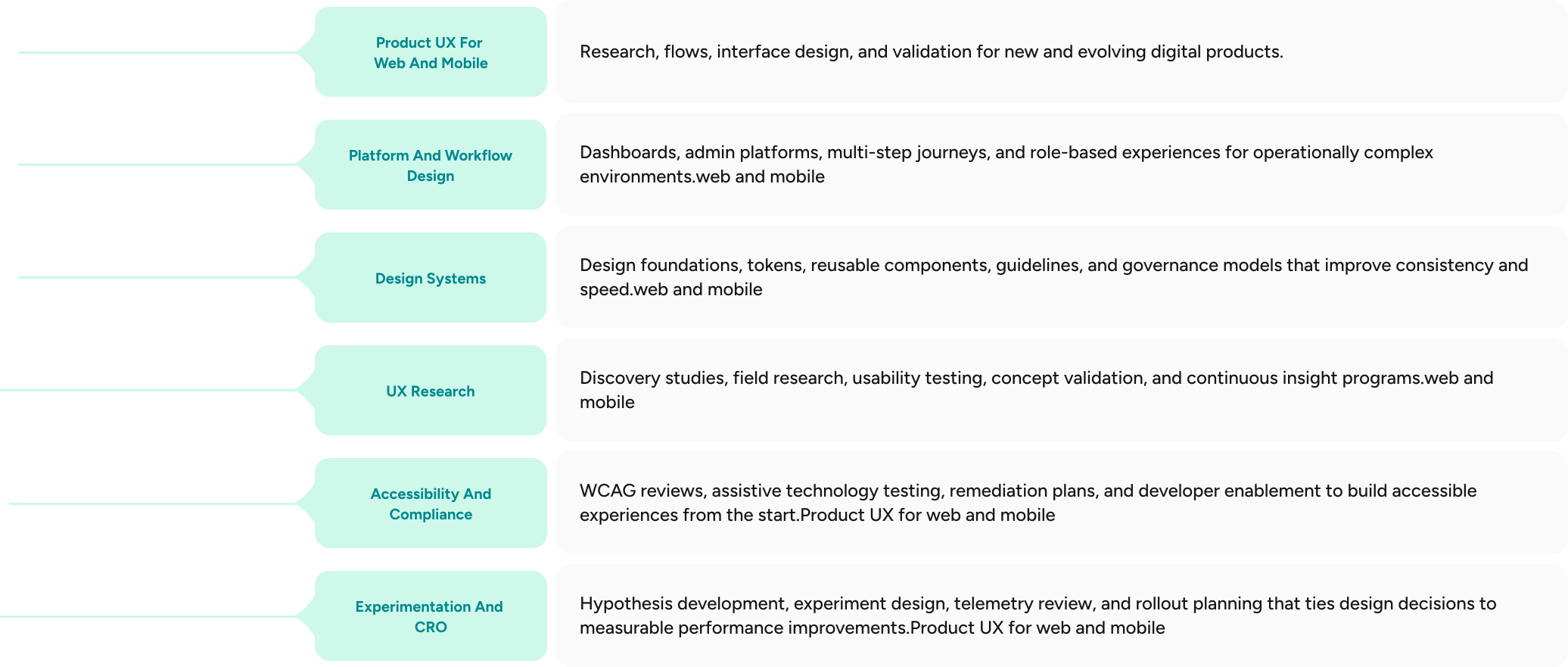
We offer flexible engagement structures depending on product maturity, internal capability, and business urgency.

A cross-functional design pod aligned to a defined scope, timeline, and outcome.
Design specialists who integrate into your product or engineering team to accelerate execution.
Focused assessments, recommendations, and action plans for teams that need clarity before scaling design investments.

Flexible subscription-style support across business units for ongoing UX needs.
A structured program to audit, build, roll out, and govern your Design System.


Our working model helps teams move from ambiguity to execution in a disciplined way.

We start with people, context, constraints, and success metrics to build a grounded view of the opportunity.

We define the problem, align on the right opportunity, and identify the KPIs that matter.

We sketch flows, iterate wireframes, and move toward high-fidelity designs with speed and precision.

We validate through usability sessions, analytics checks, and experiments to reduce guesswork.

We document patterns, strengthen systems, and hand off clearly so teams can build and evolve with consistency.
We collaborate closely with product and engineering teams so design intent survives delivery. Our process is designed to reduce translation gaps between strategy, design, and build.

Yes. We can support experience design across digital touchpoints, platforms, and product ecosystems, though our core strength is product and workflow design.
Yes. We design with platform, engineering, and business constraints in mind and document practical solutions that can be implemented effectively.
Yes. A focused UX audit is often the fastest way to identify quick wins, establish a baseline, and create a roadmap for measurable improvement.
Yes. Accessibility is integrated into definition, design, validation, and handoff, rather than treated as a downstream requirement.
Yes. We create new systems and evolve existing ones through components, tokens, usage guidance, and governance.